If you are looking for a South Shore town where daily life feels tied to the water without giving up convenience, Duxbury stands out. You may be wondering what it is really like to live here beyond the postcard views. This guide walks you through how the beach, bay, village centers, recreation, and housing style shape everyday living in Duxbury. Let’s dive in.
Duxbury at a glance
Duxbury is a predominantly residential town on the South Shore, about 35 miles south of Boston. It is bordered by Cape Cod Bay, Duxbury Bay, Kingston Bay, Plymouth, Pembroke, and Marshfield.
The town describes itself as a village-atmosphere community with beaches, recreation, arts, and strong historic-preservation priorities. It also notes that much of its land is conserved to protect the aquifer and preserve open space, which helps explain the orderly, coastal feel many people notice right away.
Beach access shapes the routine
In Duxbury, the shoreline is not just a weekend backdrop. Beach access is part of the town’s daily rhythm, especially in warmer months, and it plays a big role in how residents spend free time close to home.
Duxbury Beach is a glacial outwash barrier beach that encloses Duxbury Bay. Town beach operations note that walk-on pedestrian access is open on both the oceanside and bayside, while vehicle access is seasonal and can change based on tides, weather, and avian activity.
For many people, that means beach days here feel managed and local rather than crowded and resort-like. You have a system that supports access while still reflecting the realities of a protected coastal environment.
Powder Point Bridge adds character
One of the best-known access points is Powder Point Bridge. The town says this half-mile bridge is reputedly the longest wooden bridge in the country.
That detail matters because it speaks to the experience of getting to the beach in Duxbury. Even the route in feels distinctively local, with a strong sense of place that blends scenery, history, and routine.
Beach access has a practical side
The town notes that sticker holders typically use Powder Point Bridge. It also points to public day parking at Duxbury Beach Park and access routes through Marshfield, Canal Street, and Gurnet Road.
If you are thinking about living in Duxbury, this is useful context. Coastal access is part of everyday life here, but it comes with seasonal patterns and town-managed logistics that are worth understanding.
Duxbury Bay supports active living
The bay is just as important to local lifestyle as the ocean beach. Duxbury Bay functions as an active recreation space, not simply a scenic view.
Duxbury Bay Maritime School offers junior and adult sailing, rowing, paddlesports, marine science and fishing, power boating and tours, adaptive programming, and community events. Its Maritime Adventures program includes sailing, kayaking, swimming, fishing, rowing, snorkeling, and marine-science activities.
That range of programming shows how closely water access and daily life are connected in Duxbury. Whether you want structured instruction or a more casual connection to the bay, the town’s waterfront culture supports both.
Waterfront culture extends beyond sports
Duxbury’s historical and cultural programming also leans toward the water. The Duxbury Rural and Historical Society’s current calendar includes boat tours of Duxbury Bay, events at the King Caesar House, breakfast talks, Clark’s Island outings, and seasonal gatherings.
This gives the town’s maritime identity more depth. Life near the bay is not only about recreation, but also about local history, shared traditions, and community events that bring people together.
Hall’s Corner anchors daily errands
While the shoreline gets much of the attention, daily convenience matters just as much. In Duxbury, Hall’s Corner serves as the practical center for day-to-day errands.
A town planning study describes Hall’s Corner as the largest commercial area in town, with grocery, drugstore, post office, bank, retail, office, miscellaneous-shop, and dining uses. The Sidewalk and Bike Path Committee also identifies it as one of Duxbury’s main hubs, connected to commercial centers, public buildings, parks, recreation facilities, and schools.
For residents, this means everyday tasks can feel more streamlined than you might expect in a coastal town. The village atmosphere is real, but so is the practical convenience.
Village life feels connected
One of Duxbury’s strengths is that its commercial life and civic life are closely linked. Rather than feeling spread out or disconnected, the town’s hubs support a more integrated routine.
That can make a difference in how a town feels over time. You are not just living near the coast. You are living in a place where errands, recreation, and local events fit into a recognizable community pattern.
Recreation goes beyond the beach
Duxbury’s lifestyle is not limited to summer. The Recreation Department says it offers programs throughout the year, with facilities that include Percy Walker Pool, Alden Street courts, Tarkiln pickleball courts, ballfields, playgrounds, and community-center spaces.
The department also manages beach operations, which is telling. Seasonal beach life is part of the same civic system that supports year-round programming, helping create a town experience that stays active in every season.
Community events add rhythm
The Duxbury Rural and Historical Society says it runs roughly 50 programs, events, and rentals each year. Its current offerings include bay-focused experiences, historic-house programming, outings, and sunset gatherings.
For someone considering a move, this matters because it points to a community with a steady public calendar. There is an established rhythm to life here, with opportunities to stay engaged in ways that feel distinctly local.
Housing styles reflect coastal New England
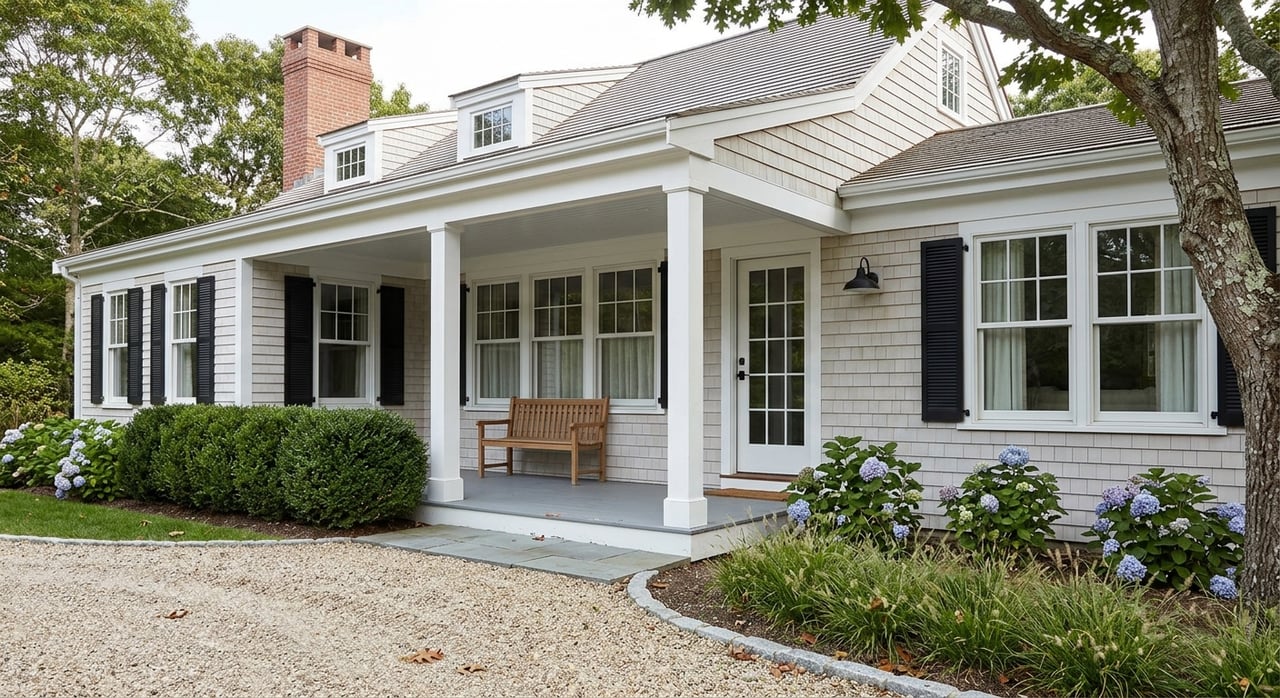
Duxbury’s housing stock adds another layer to its everyday appeal. The town’s residential design guide identifies a broad architectural palette that includes Cape, Federal, Victorian, Greek Revival, Georgian, Saltbox, Arts and Crafts, Garrison Colonial, Shingle Style, Beach Style Contemporary, and Beach Style Lighthouse.
The guide also notes that traditional New England forms work well in town. Many homes use natural wood shingles, and seaside settings often lean toward cooler grays and whites.
Historic character remains visible
Duxbury’s maritime prosperity helps explain the number of older architectural styles still present today. Town historical materials connect that prosperity to the survival of many Federal-period homes, and the comprehensive plan notes that the Old Shipbuilders’ Historic District includes well-preserved Georgian, Federal, and early Victorian buildings.
One of the town’s best-known landmarks is the King Caesar House, a Federal mansion built in 1809 for shipbuilder Ezra Weston II. Details like this help give Duxbury a strong sense of continuity between past and present.
Preservation influences the streetscape
The town’s Historical Commission was created to identify, document, and protect historic resources. Local historic-district guidelines emphasize compatibility of scale, materials, rooflines, windows, and additions.
In practical terms, this helps support a cohesive look in the town’s older core and shoreline areas. Even where homes span different centuries and style families, the overall streetscape tends to feel intentional and well kept.
What everyday life in Duxbury feels like
Taken together, Duxbury offers a coastal lifestyle shaped by beach access, bay recreation, a compact village shopping area, and preservation-minded neighborhoods. The overall feel is residential, orderly, and community-oriented.
For some buyers, the appeal is the ability to stay connected to the water in a way that feels woven into ordinary life. For others, it is the blend of historic character, open space, and practical convenience that makes the town easy to picture as home.
If you are comparing South Shore communities, Duxbury offers a distinctive mix of shoreline access and village rhythm. If you want help exploring homes or understanding how Duxbury fits your goals, the Doran Hall Team would be glad to help.
FAQs
What is everyday life in Duxbury, Massachusetts like?
- Everyday life in Duxbury centers on a residential coastal setting with beach access, bay recreation, village-style errands, year-round recreation facilities, and a strong historic-preservation character.
What is Hall’s Corner in Duxbury, Massachusetts?
- Hall’s Corner is Duxbury’s largest commercial area and includes everyday services such as grocery, drugstore, post office, bank, retail, office, and dining uses.
What beach access options are available in Duxbury, Massachusetts?
- Town beach operations say Duxbury Beach offers walk-on access on both the oceanside and bayside, while vehicle access is seasonal and may change based on tides, weather, and avian activity.
What kinds of waterfront activities are available in Duxbury, Massachusetts?
- Duxbury Bay supports activities through Duxbury Bay Maritime School, including sailing, rowing, paddlesports, fishing, marine science, power boating, tours, and adaptive programming.
What architectural styles are common in Duxbury, Massachusetts?
- The town’s design guide identifies styles such as Cape, Federal, Victorian, Greek Revival, Georgian, Saltbox, Arts and Crafts, Garrison Colonial, Shingle Style, Beach Style Contemporary, and Beach Style Lighthouse.