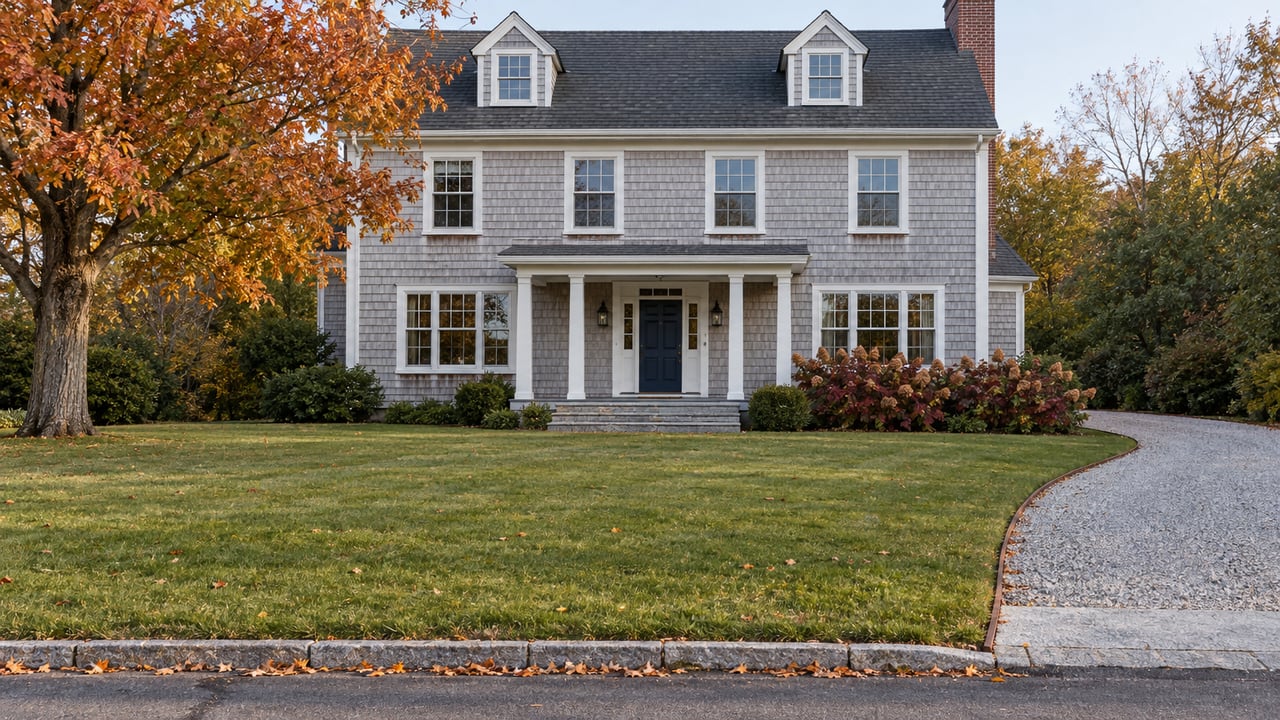
When one family moved to Bates Lane in 1997, they did not know the street was a private way. The road was in good shape then. By April 2024 it had worn down enough that ten of the street's twelve households signed a petition asking the Select Board how to get it accepted as a public way. As the Cohasset Anchor reported, the reason was simple. "We're not on the town's paving list because it's a private way, and we'd like to get on that list for the future."
At the same meeting, then-Town Manager Chris Senior said the town had once tried to require real estate agents to tell buyers when a property sits on a private way, and found it could not require that. That matters more in Cohasset than in most towns. Here, whether a street is public or private decides who pays for its pavement, and since 2018 the cost has fallen on the people who live on the street. It works like a second, shared obligation that the tax bill never shows.
Counted by Street, Then by Mile
How common private roads are depends on how you count them. The Anchor's 2024 report put the town's count at 93 private ways among 165 roads. At an August 19, 2026 Planning Board meeting, member Amy Glasmeier put the private share at 57 percent. Measured by length, the picture changes. According to the August 5, 2026 Planning Board minutes, a resident cited figures from the former town engineer of about 38 miles of public ways and 14 miles of private ways.
| Measure | Public | Private | Source |
|---|---|---|---|
| Number of roads | 72 | 93 | Town count reported by the Cohasset Anchor, April 2024 |
| Miles of road | About 38 | About 14 | Former town engineer's figures, cited at the Planning Board, August 2026 |
Taken together, the two counts mean private ways tend to be short. Many are cul-de-sacs, lanes and subdivision loops serving a handful of homes. So a repair bill is split among few owners, not spread across the town. Planning Board Chair Clark Brewer added that some of these roads were built to subdivision standards but were never accepted by the town.
What Changed Between 2017 and 2018
At the August 5 meeting, a Bates Lane resident told the Planning Board that before 2018 the town paved and maintained private roads much as it did public ways, and that a 2017 Town Meeting vote changed that. Town records show three separate actions behind that shift:
- May 1, 2017, Annual Town Meeting, Article 21. Voters unanimously adopted a provision under Massachusetts General Laws Chapter 40, Section 6N. It authorizes temporary repairs to private ways, subject to a public-necessity finding, a petition and other safeguards.
- December 4, 2017, Special Town Meeting, Article 8. Voters unanimously authorized $500,000 in borrowing for private-way betterment projects. The warrant said the owners who benefit would repay it through betterments.
- February 13, 2018, Board of Selectmen policy. The Policy for Temporary Repair of Private Roads set out how the arrangement works in practice.
Under the 2017 bylaw, a private way becomes public only when Town Meeting accepts it and the town obtains rights to the property. Until then, the 2018 policy is the main route to getting a road fixed.
How a Repair Gets Paid For
The 2018 policy covers only private ways that have been open to public use for more than five years. Each step depends on the neighbors acting together.
- A petition goes to the DPW Engineering Division by July 15. It needs signatures from at least 80 percent of the abutters and "beneficiaries," meaning anyone who uses the road to reach their property, plus a non-refundable $500 fee that is later credited toward the cost.
- A town project manager scopes the work and prices it. By October 1, each owner receives a breakdown of their share. If 80 percent have not signed agreements to repay by the first business day of December, the project is canceled.
- Around February, the board holds a hearing and votes on whether to recommend a funding request for a future Town Meeting. It can also postpone or cancel the project.
- After Town Meeting approves funding, the betterment order is filed at the Norfolk County Registry of Deeds. Shares are split equally among beneficiaries.
Repayment follows a schedule tied to the size of each share:
| Share per owner | Repayment period |
|---|---|
| $0 to $499 | Not apportioned |
| $500 to $1,500 | Up to 3 years |
| $1,501 to $2,000 | Up to 5 years |
| $2,001 or more | Up to 10 years |
Two lines in the policy matter most to a buyer. Betterment assessments are a lien on the property. And any maintenance or future repair of the finished work is "the sole responsibility of the abutters or beneficiaries and not the Town of Cohasset Department of Public Works." From the petition deadline in July, the earliest Town Meeting vote comes the following spring. On a street that needs a full repaving, the sums get real. The Anchor reported an estimate of about $87,000 to pave Bates Lane, and the resident's proposed cost-sharing plan worked out to roughly $7,000 per household over ten years.
Same Tax Rate, Separate Road Bill
Owners on private ways pay the same tax rate as everyone else, a point the Bates Lane residents raised with the Select Board in 2024. For fiscal year 2026, the town's classification hearing presentation set the rate at $11.35 per $1,000. The average single-family assessment was $1,481,437, and the average tax bill was $16,814.31.
Part of that tax money goes to roads. Town Meeting approved $900,000 for roads and sidewalks in 2024 and $700,000 in 2025, both from the Roads and Sidewalks stabilization fund. At the May 4, 2026 Annual Town Meeting, voters unanimously approved a $900,000 transfer into the fund for FY2027 projects. Chair Brewer noted at the August 5 Planning Board meeting that an earlier Town Meeting vote creating a $1 million highway fund excluded private ways. So an owner on a private way helps pay to repave public streets and then pays again, through neighbors and a lien, to repave their own.
Where the Town Stands This Fall
Town officials have been raising the issue for a while. In 2024, the Cohasset Anchor reported that Select Board member Jack Creighton told the Bates Lane residents, "This is an issue that keeps bubbling up." He called for a comprehensive way to address and fund it. Then-chair Jean Healey Dippold noted that accepted roads would have to be brought up to public standards, which she called "a huge undertaking."
None of the Town Meeting warrants since then has included a private-way article. That covers December 9, 2024, May 12, 2025, November 3, 2025, May 4, 2026, and the fourteen-article warrant for the October 26, 2026 Special Town Meeting. In August 2026, a Bates Lane resident told the Planning Board the road is still private.
The Planning Board took up the subject at two meetings this summer, and the minutes outline the risks a buyer takes on:
- Vice Chair Kevin Heine argued the issue is a town-wide question of emergency services and access. He warned that pushing the burden onto homeowners associations could cause "balkanization and property devaluation."
- Town Counsel Carolyn Murray noted that events such as blizzards often wipe out HOA capital funds. She suggested sorting private roads by condition to find ones the town might accept with little work.
- On August 19, Dana Eagles said the main risk is that owners on private ways "have no recourse when contractors damage the road." The board tabled the discussion until a full board could take it up with more research.
Ideas raised in those meetings include annual reserve funds, insurance or financial guarantees before new construction, and possibly hiring a consultant. None of them has been adopted.
Before You Write an Offer on a Cohasset Lane
Because the town cannot make disclosure mandatory, a buyer has to ask whether a street is public or private. A resident told the Planning Board that his wife, a local agent, now discloses private-road status to buyers, and that this was unnecessary before 2018. Useful questions include:
- Is the street a public way accepted by Town Meeting, or a private way?
- Has a betterment order for this road been filed at the Norfolk County Registry of Deeds?
- Is there a homeowners association or written road agreement, and does it hold any reserve?
- What shape is the surface and drainage in, and is construction nearby that could bring heavy trucks?
- How many households share the road? That number sets each owner's share of any future repair.
This post is general information, not legal, tax or financial advice. Confirm how liens, betterments and road agreements affect a specific property with a real estate attorney or other qualified professional.
A Few Straight Answers
Does the town plow private ways? In April 2024, the Cohasset Anchor reported that the DPW plowed all town streets but did not pave private ones. Paving and repair are the main costs that stay with owners.
Can neighbors get their road accepted as public? Under the private-ways provision recorded in the town's 2017 Annual Town Meeting minutes, only through a Town Meeting vote, and only after the town obtains rights to the road. Town officials have said accepted roads would need to meet public-road standards.
Does a betterment follow the house when it sells? Under the 2018 policy, a betterment assessment is a lien on the property, assessed under Massachusetts General Laws Chapter 80. How it is handled at closing is a question for the closing attorney.
If you are weighing a house on one of Cohasset's private lanes, or preparing to sell one, the Doran Hall Team can help you sort out the road's status, its history and what it means for price before anyone signs. Request your home valuation and we will include the street it sits on in the conversation.