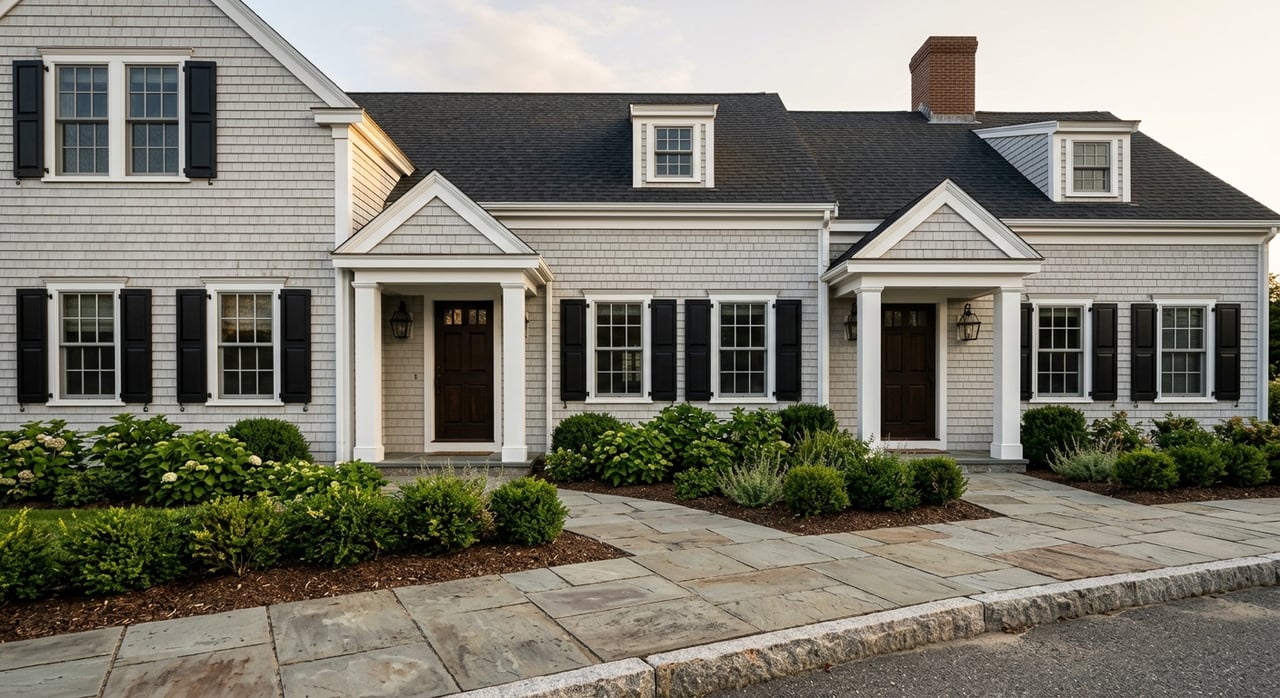
Wondering whether a condo or townhome in Hingham could give you the lifestyle you want with less day-to-day upkeep? In a town where home values are high and many buyers want a simpler way to enjoy South Shore living, these properties can offer a practical entry point or a smart next move. This guide will help you understand where condos and townhomes tend to be located in Hingham, how ownership can work, and what to review before you buy. Let’s dive in.
Why Hingham condos stand out
Hingham is a mostly owner-occupied community with a high median owner-occupied home value. According to U.S. Census QuickFacts for Hingham, the owner-occupied housing rate is 80.7%, and the median owner-occupied value is $1,134,200 for 2020 to 2024. That helps explain why condos and townhomes often appeal to buyers who want lower-maintenance living in a high-value market.
For many buyers, the draw is not just price point. It is also the chance to own in Hingham while spending less time on exterior maintenance, landscaping, and snow care. If your goal is to balance convenience, commuting, and lifestyle, this segment deserves a close look.
Where condos and townhomes are located
In Hingham, condo and townhome options tend to cluster in a few key areas rather than being spread evenly throughout town. That pattern reflects both existing development and local zoning that supports multifamily housing near transportation and daily amenities.
The town’s zoning bylaw and Multifamily Overlay District identify areas tied to multifamily development, including 319 Lincoln Street, Hewitts Landing, 111 Fitzroy Drive, French and Fort Hill Streets, The Cove, and 152 Shipyard Drive. The purpose includes placing housing within walking distance of retail, restaurants, civic and recreational uses, and public transportation.
Shipyard and ferry access
The Shipyard is one of the clearest examples of low-maintenance, commuter-oriented housing in Hingham. Town district profiles note multifamily buildings at 3 Lincoln Street and 2 Shipyard Drive, and a recent town document describes a proposed 52-unit condominium community at 29 Shipyard Drive across from the ferry terminal.
If you commute to Boston or want easier regional access, this area stands out. The town confirms that commuter boat service runs from Hingham to Rowes Wharf and highlights direct access to Boston through ferry, Route 3, and rail connections.
Downtown Hingham options
Downtown Hingham also includes multifamily inventory, with town district profiles identifying buildings at 105 North Street and 51 South Street. For buyers who want to stay close to shops, services, and a more walkable setting, this area can be worth watching.
The appeal here is often convenience. You may find that a downtown condo offers less upkeep while keeping you near daily errands and town amenities.
South Hingham and Route 3A
South Hingham is identified by the town as the primary growth area around Derby Street and Route 3A. If you are looking for newer or larger-scale multifamily options, this corridor may offer some of the most relevant opportunities.
This area can also make sense if your priorities include road access and proximity to shopping and services. As always, the right fit depends on your routine, commute, and preferred setting.
Are all townhomes in Hingham condos?
No. That is one of the most important points to understand before you buy.
Hingham’s zoning bylaw allows townhouse-style housing within the multifamily overlay, but exterior appearance does not automatically tell you the legal ownership structure. Under Massachusetts condominium guidance, condominiums are governed by recorded documents such as the master deed, bylaws, and Chapter 183A of the General Laws.
In plain terms, a property may look like a townhome but still be condominium ownership. That is why you should verify the deed, master deed, bylaws, and association documents instead of making assumptions based on style alone.
What ownership usually means
In Massachusetts, condo ownership generally means you own your individual unit and share an undivided interest in the common areas and facilities. Those rights and responsibilities are defined by the legal documents for the community.
This matters because your monthly costs and your day-to-day experience are shaped by more than the floor plan. You also need to understand what the association maintains, what rules apply, and how shared expenses are handled.
What amenities you may see
Hingham’s multifamily design standards give a good picture of features that often come with these communities. The town’s bylaw allows shared amenities such as community rooms, pools, and playgrounds, and it requires common outdoor space for larger developments.
The same bylaw also favors practical design features, including sidewalks, screened dumpsters, and parking located to the side or rear of buildings. For multifamily housing with 10 or more units, the parking requirement is reduced to 1.5 spaces per unit, which can be useful context when you are comparing communities.
Why lifestyle matters in Hingham
For many buyers, the value of a condo or townhome in Hingham goes beyond the unit itself. The town says it has more than 4,000 acres of protected open space, including major recreation areas such as Bare Cove Park and Wompatuck State Park.
That can be a meaningful advantage if you want a lower-maintenance home without giving up access to outdoor recreation. In Hingham, convenience and open space often go hand in hand.
What to review before making an offer
Association review is one of the most important parts of buying a condo or townhouse-style property. Massachusetts guidance offers a practical checklist that can help you ask the right questions early.
According to state consumer guidance on condominiums, you should review:
- What the condo fee includes
- Operating and capital reserves
- Utilities
- Parking and guest parking
- Pet rules
- Rental rules
- Trash and refuse handling
- Snow removal
- Security
- Extra storage
- Mail and parcel delivery
- The percentage of owner-occupied units
These items can affect both your monthly budget and your overall experience in the community. A property that looks ideal on paper may feel very different once you understand the rules, reserves, and shared expenses.
Local examples of larger communities
Some Hingham condo associations are substantial in size and scope. Town documents describe Beal’s Cove Village Condominium as a 198-unit community across 22 buildings on 20 acres, governed by a master deed, declaration of trust, bylaws, amendments, rules, and a board of trustees.
Another town filing states that Hingham Woods Condominium at 150 Beal Street has 277 residential units and 556 parking spaces, including spaces reserved for specific owners and guest use. These examples are a useful reminder that association structure, governance, and parking arrangements can vary quite a bit from one community to another.
Check records and get the right help
If a condo or townhome has had updates, permit work, or a more complex ownership history, local records matter. Hingham’s Building Department notes that public records are available to help check legal occupancy, compliance, and complaints before purchase.
It is also smart to involve professionals early. Massachusetts notes that condo-law questions and interpretation of condo documents are legal matters that should be directed to an attorney with real estate experience, including condominium law. Before you move forward, review the master deed, bylaws, budget, reserve information if available, and rules with qualified professionals.
Historical context on the market
If you are trying to understand how this segment has evolved, the town’s housing plan offers helpful background. It reports that much of Hingham’s new-unit growth since 2010 had been concentrated in larger multifamily developments, and that the median condo sale price rose 35% from 2010 to 2019.
That figure is best viewed as historical context, not current pricing. Still, it helps explain why many buyers pay close attention to condo and townhome opportunities here.
How to narrow your search
If you are starting your search, it helps to focus on a few practical questions first:
- Do you want ferry, rail, or Route 3 access for commuting?
- Would you prefer a downtown setting, the Shipyard area, or South Hingham?
- Are you comfortable with condo association rules and monthly fees?
- Do you want shared amenities, or would you rather keep fees as lean as possible?
- Is parking, storage, or guest access a top priority?
The right answer is rarely just about square footage. It is about matching the ownership structure, location, and lifestyle to how you actually live.
If you are weighing condos or townhomes in Hingham, having local guidance can make the process much clearer. The Doran Hall Team can help you evaluate location, ownership structure, community rules, and the due diligence that matters most so you can move forward with confidence.
FAQs
Are all townhouse-style homes in Hingham condominiums?
- No. Some townhouse-style properties may be condominium-owned, so you should verify the deed, master deed, and governing documents before making assumptions.
Where are commuter-friendly condos in Hingham usually found?
- Many low-maintenance, commuter-oriented options are clustered near the Shipyard, downtown Hingham, South Hingham, and areas tied to ferry, rail, and Route 3 access.
What should you review before buying a Hingham condo?
- You should review condo fees, reserves, parking, pet and rental rules, trash, snow removal, storage, mail delivery, and owner-occupancy levels.
Why should you check Hingham building records before buying?
- Public building records can help you confirm legal occupancy, compliance history, and past complaints, especially when a property has had renovations or permit work.
Do you need an attorney for a Hingham condo purchase?
- Massachusetts says condo-law questions and document interpretation are legal matters, so it is wise to consult an attorney with real estate experience.